
Designing a Better Path to Cancer Diagnosis
A Provincial Program Designed With Albertans
The Alberta Health Services Cancer Strategic Clinical Network was tasked with developing a provincial strategy to improve how Albertans access and experience cancer diagnosis.
J5 worked alongside the Network to design the Alberta Cancer Diagnosis Program, bringing patients, families, healthcare providers, system leaders and community partners into the process. Together, we developed a program grounded in lived experience that could help people move from the first suspicion of cancer to a diagnosis with greater speed, coordination and support.
INDUSTRY
Healthcare
CLIENT
Alberta Health Services
WHY IT MATTERS
The period before a cancer diagnosis can be frightening, confusing and difficult to navigate. Patients may move between primary care, diagnostic testing, specialists and community services without clear coordination. People without a regular healthcare provider or those facing systemic barriers are at greater risk of falling through the cracks.
By designing with Albertans rather than for them, we identified where the current system creates barriers and developed a coordinated model that sees the whole person, enables choice and access, and builds stronger relationships throughout the diagnosis journey.
PROCESS HIGHLIGHTS
We engaged more than 120 community members and over 200 healthcare and system stakeholders through focus groups, workshops and prototype testing.
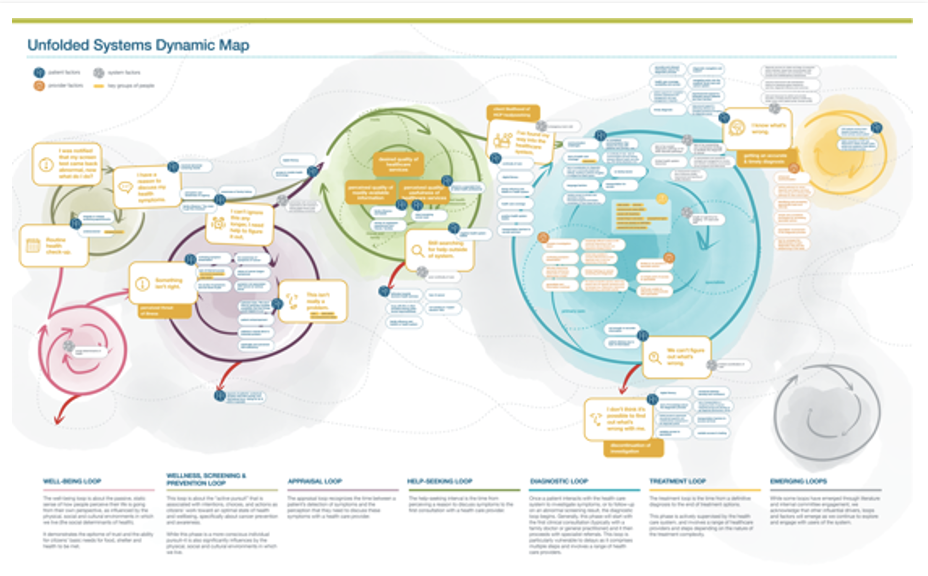
Through five cycles of co-design, we transformed lived experience and system expertise into a provincial program blueprint connecting people, technology and healthcare and community partnerships.
Impact
-
Patient Level
Centred the experiences of patients, families and communities, including people who are often underrepresented in traditional engagement processes.
Designed a clearer path to diagnosis with navigation, coordinated communication and a safety net for unattached, high-risk and complex patients.
-
Provider Level
Designed a case-support model to help primary care providers access specialist advice, coordinate referrals and testing, and receive updates as patients move through the diagnosis process.
Created shared pathways and decision supports to improve communication and help providers connect patients with appropriate clinical and community resources.
-
System Level
Developed an integrated program model built around three pillars: a case-support team, a supporting technology ecosystem, and partnerships across primary care, cancer care and community services.
Established a foundation for faster and more appropriate testing, stronger data-informed decisions, potential diversion from acute care, and continuous learning as the program is implemented and refined.