
Total Experience Framework
How customer-centric are you, really?
By designing around what people actually need, organizations can reduce complexity, focus investment where it matters most, and create services that are both more efficient to deliver and better to experience.

We assess four areas that only make sense together.
Whether you are looking at the whole organization or one internal service, the questions are the same: what should we do, who should do it, and are we ready?
Each area is scored, weighted, and analyzed to produce one overall maturity level, so you can see the connections between vision, day-to-day operations, and lived experience.
Strategy
What the organization has said it is trying to achieve, and whether this service is connected to it. Strategy is where a service either earns its mandate, funding, and attention, or quietly loses them. It is also the test for every recommendation: does this move the organization toward its goals, or only toward a better survey score?
Employee Experience
The same journey from behind the counter. What staff are trained to do, what they are permitted to do, what they work around, and what they have stopped reporting because nothing changed. This area explains most of what the customer feels.
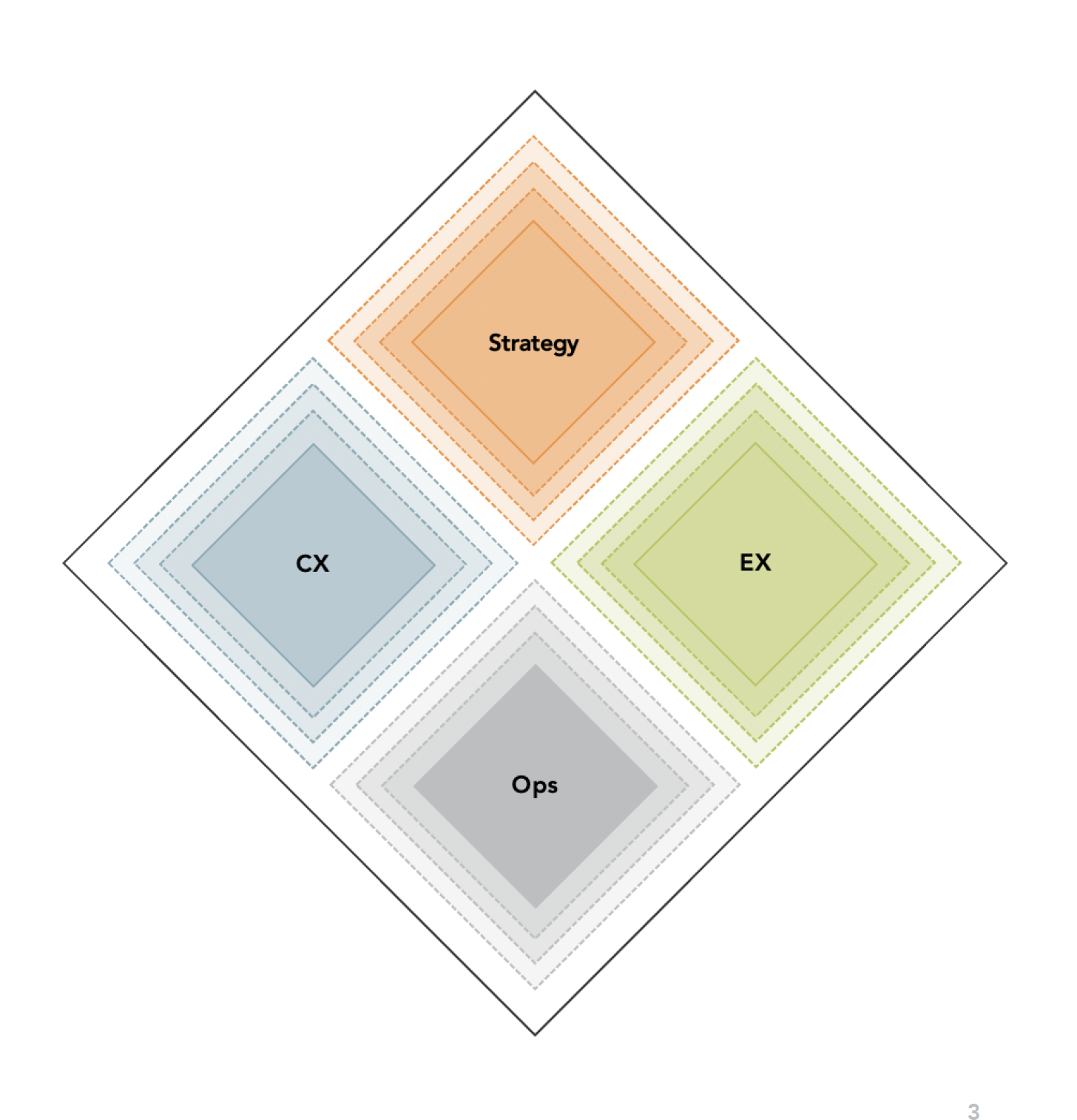
Customer Experience
The journey as a person lives it. Where they enter, where they wait, what they are asked, what they understand, and where they quietly give up. We reconstruct it from interviews, intercepts, and observation, not from the process map.
Operations
The policies, processes, information flows, structures, and incentives that shape both experiences and carry, or fail to carry, the strategy into daily work. Rarely visible to the customer, often invisible to leadership, and almost always where durable change has to happen.
What our experience assessment produces
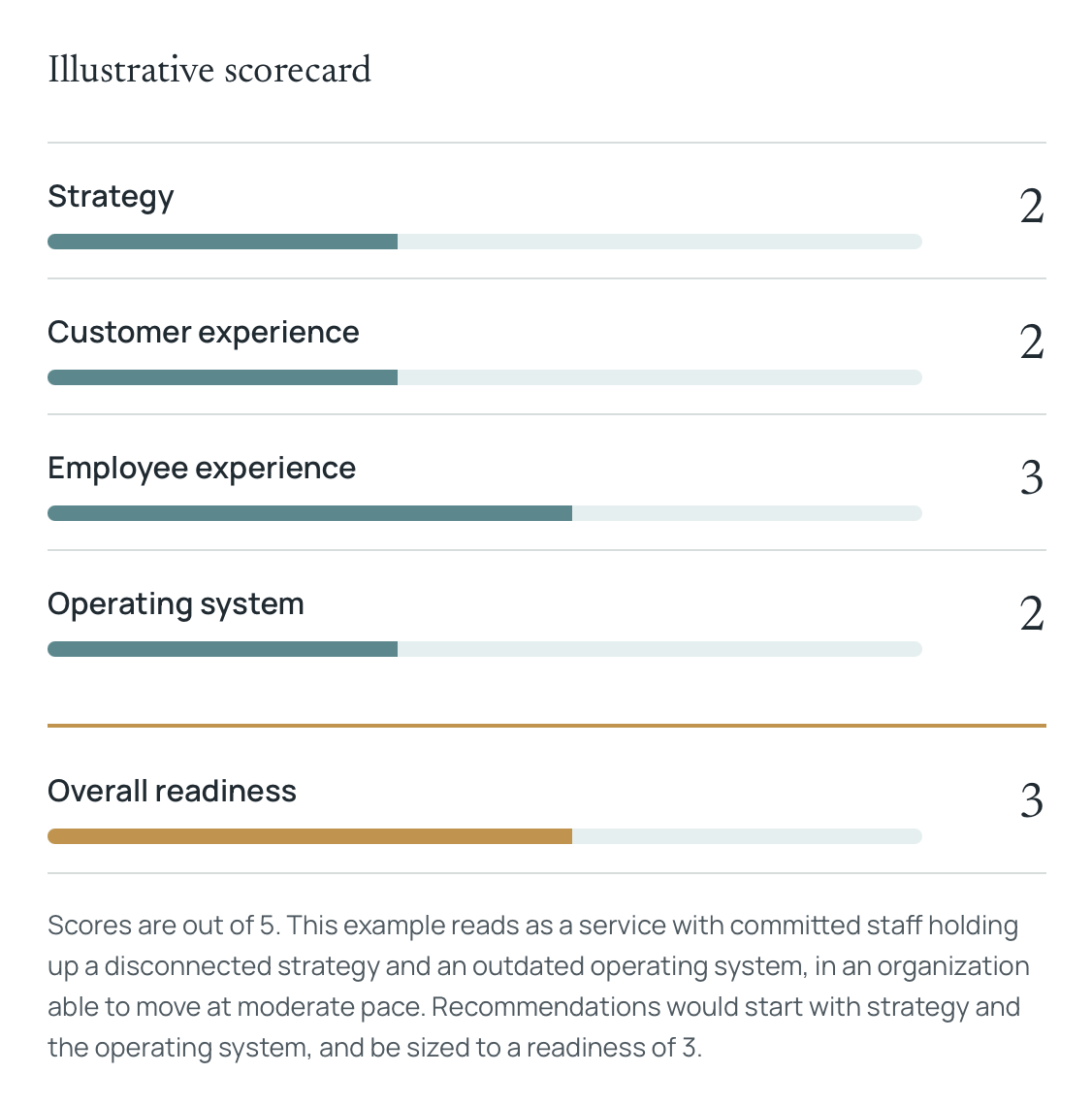
Each area is scored against the Total Experience rubric and read together to reveal where the service is strong, misaligned, or underperforming. A fifth score measures the organization’s readiness for change and helps determine the pace of implementation.
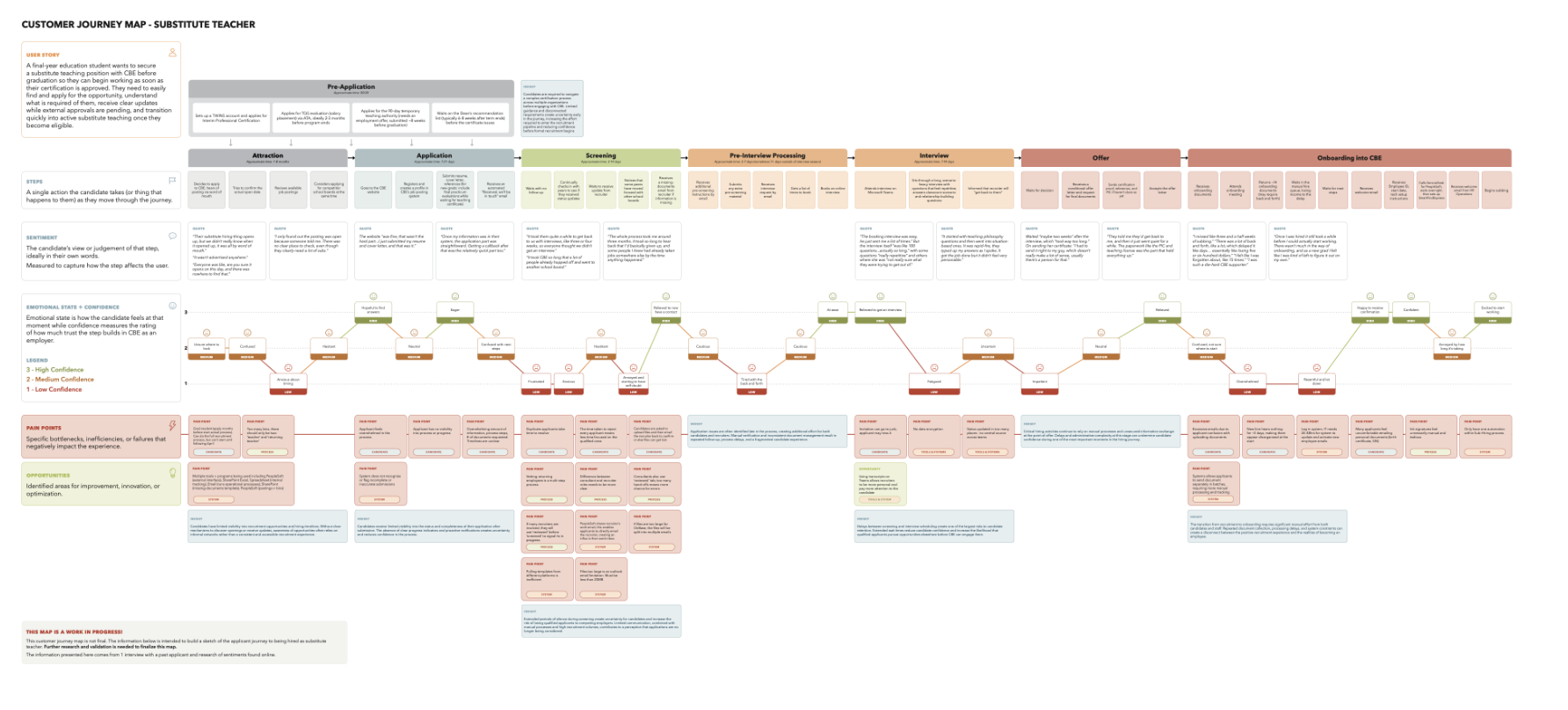
A service blueprint makes the whole service visible, connecting the customer experience to the people, processes, systems and operations behind it. It’s a key assessment artifact for understanding what’s happening today and where change will have the greatest impact.02 - Bringing ideas to life
Design services
We provide service design in ways that work best for your organization whether that’s adding expertise to an existing team to providing a fully outsourced team, practice and space.

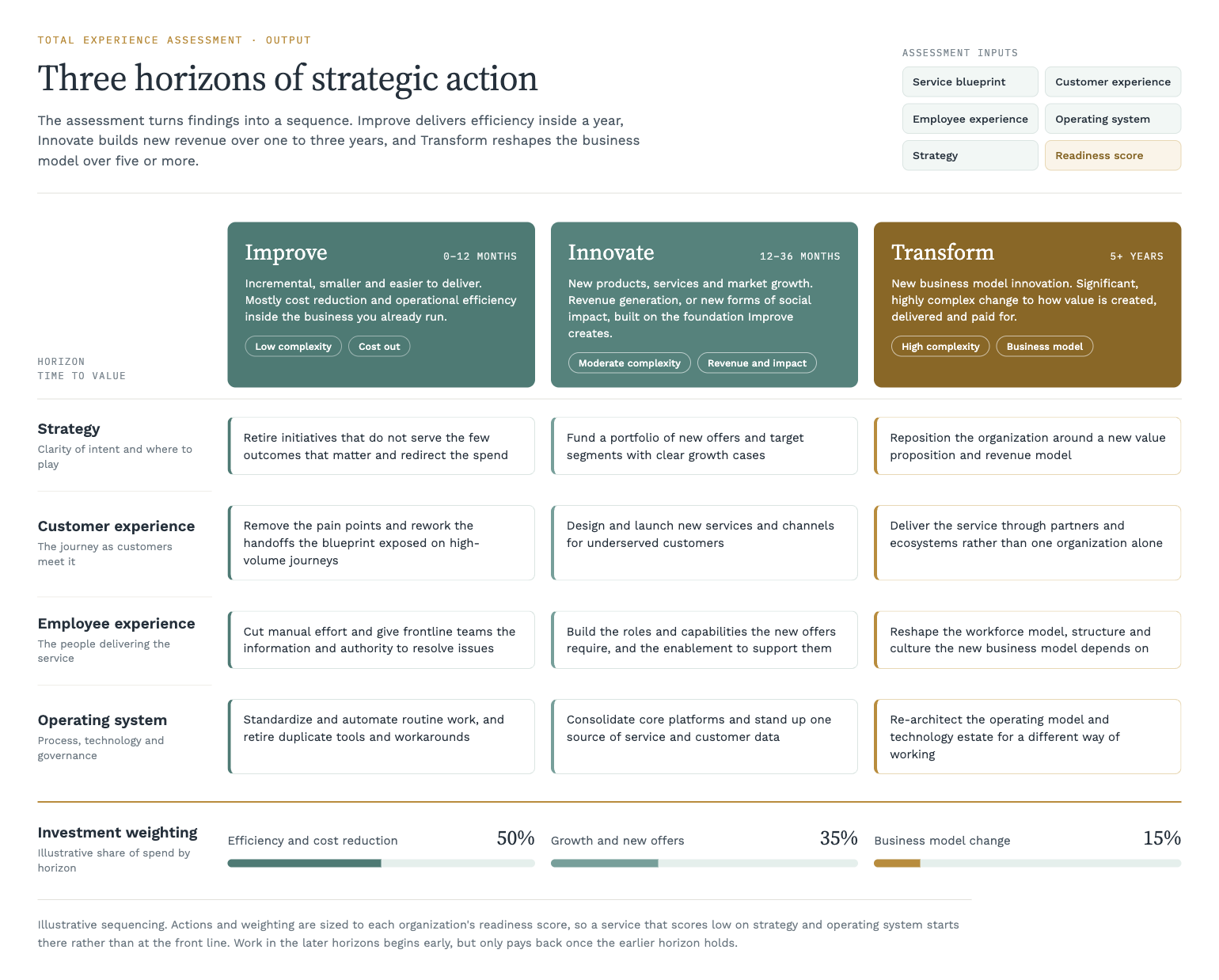
Scores tell you where you stand. Recommendations tell you what to do. Each of the four areas receives its own, tied to its score and to the findings that produced it. Then the assessment steps back and makes a single, larger recommendation about the service itself.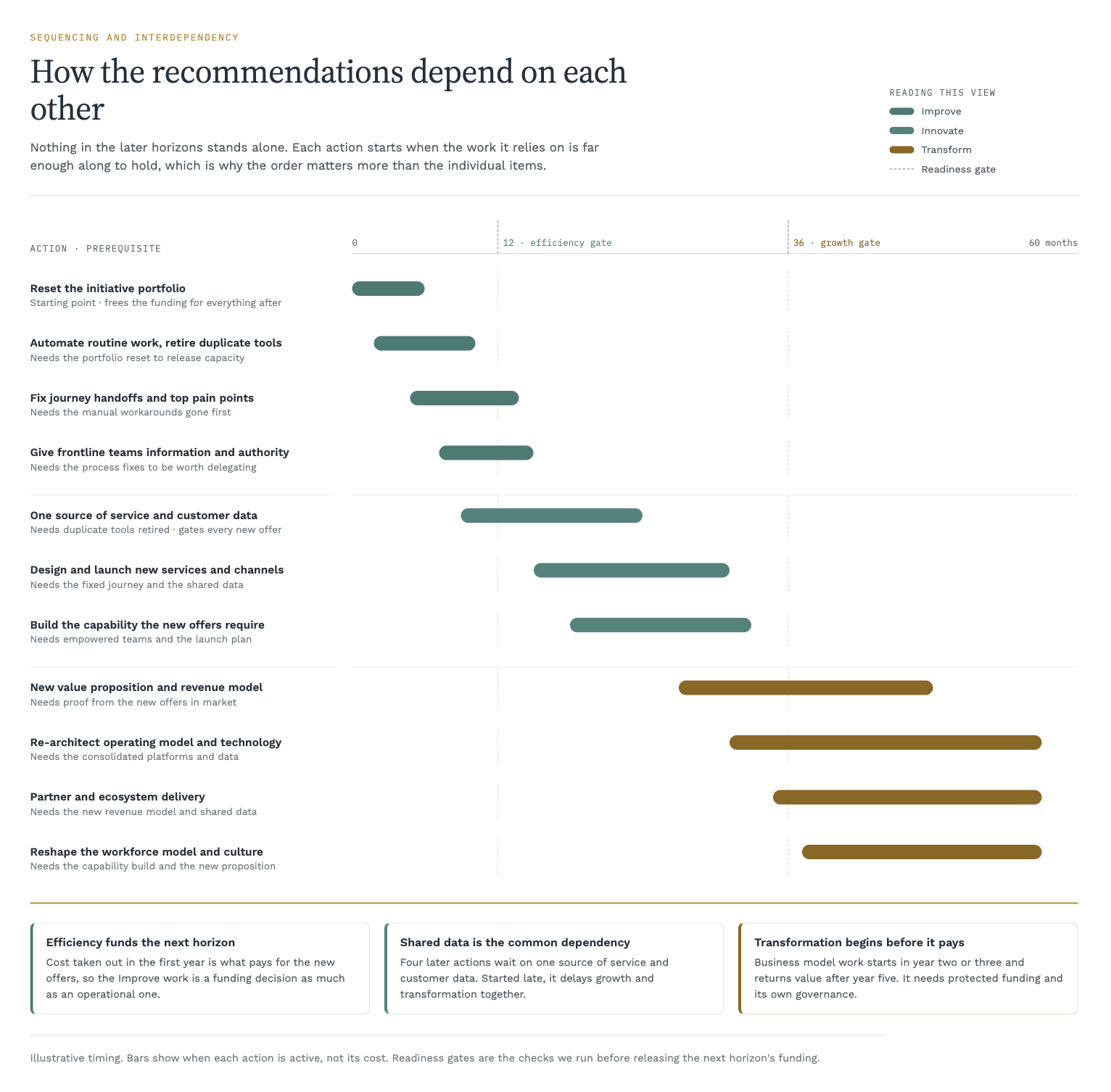
How the Total Experience is applied
Assess is our established audit methodology, refined across twelve years of service design practice. It applies the Total Experience framework in five phases with defined inputs, instruments, and outputs, so you know what you are buying before we begin.
Listen Phase
Define the service, strategic priorities, desired outcomes and measures of success.
2 weeks
Design Phase
Map the end-to-end service and evaluate Customer, Employee, Operations, Strategy and organizational readiness to reveal gaps and opportunities.
4-8 weeks
Realize Phase
Turn evidence into strategic recommendations, prioritized opportunities, business cases and a clear roadmap for action.
2-4 weeks

“Every detail was thoughtfully executed. We're thrilled with the outcome.”
— Former Customer

Ready to get started?
Download our report to explore the business impact of putting people at the centre of transformation.