
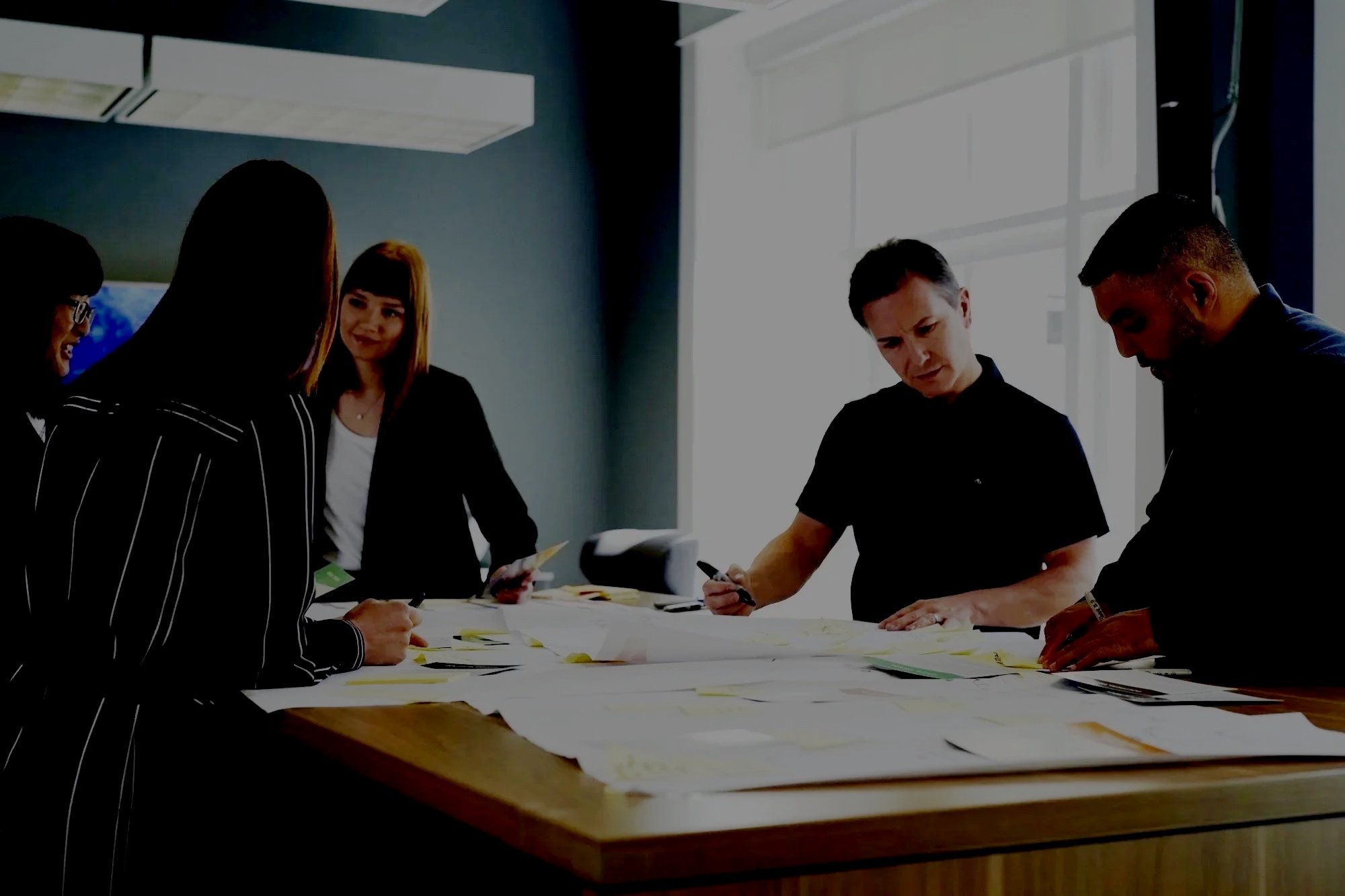
What is Service Design?
The numbers speak for themselves.
228%
Design-driven companies outperformed the S&P 500 over a 10-year period.
32%
Higher revenue growth for top design performers over five years.
301%
Return on investment from internal design thinking practices.
“J5 guided over 150 of our staff through a design-led approach to transform our clinic into a place for healing and wellness, shaped by the people who use it.”
— Jake Jennings, Executive Director at Primary Care AB
Frequently Asked Questions
-
Design bridges the gap between intention and execution.
Rather than stopping at recommendations, we work with your teams to translate strategy into tangible services, processes, and experiences.Through journey mapping, service blueprints, and rapid prototyping, ideas are tested and refined in real-world conditions before scaling. This reduces the risk of failure and ensures that what gets implemented actually works for the people delivering and receiving it.
-
Traditional projects often rely on assumptions made early and validated too late.
Design flips that approach.By engaging users and frontline teams early, and testing solutions in small, controlled ways, we uncover issues before they become expensive problems. This leads to faster decisions, fewer reworks, and more predictable outcomes. The result is delivery that is not only faster, but more resilient and aligned with real needs.
-
Transformation in complex environments often fails because it focuses on structure and policy without fully addressing human behavior and experience.
Design brings those elements together.
It helps leaders understand how systems are actually experienced across departments, roles, and touchpoints, and then co-creates solutions that align strategy, operations, and culture. This creates change that people can adopt, sustain, and build upon, rather than resist. -
Yes. A core part of our work is helping organizations build their own design and innovation capability.
We do this by working alongside your teams, not separately from them. Through hands-on collaboration, coaching, and practical tools, your people learn how to apply design in their day-to-day work. Over time, this builds confidence and creates a more adaptive organization that can continuously improve without relying on external support.
-
We tailor our approach based on your needs, but our work typically falls into four modes:
Consulting projects: Focused engagements that move from insight to implementation
Strategic partnerships: Ongoing collaboration to support transformation over time
Capability building: Training and coaching to grow internal skills
Embedded support: Working within your teams to accelerate delivery
-
The value of design shows up in both measurable outcomes and reduced waste. Organizations typically see:
Higher adoption of new services and tools
Reduced rework and project delays
Improved employee engagement and retention
Better alignment across teams
More effective use of limited resources