
Start with the customer, then work backwards.
In healthcare, government, and the non-profit sector, innovation cannot be defined by efficiency alone. Operational excellence, cost discipline, governance and compliance matter. But in sectors responsible for care, equity, safety, and public trust, experience outcomes are fundamental. When services are poorly designed, adoption declines, trust erodes, and long-term costs rise. When services are designed around lived experience, operational performance and social outcomes improve together.
The critical leadership question is not whether the organization is innovating. It is whether innovation is being driven from the inside-out or from the outside-in. At J5 Design, our work is grounded in a simple but demanding principle. Organizations become more innovative and more sustainable when they work backwards from the lived experience of the people they serve. Strategy, systems, governance, hiring, training, and performance management must align to customer needs rather than internal systems or convenience.
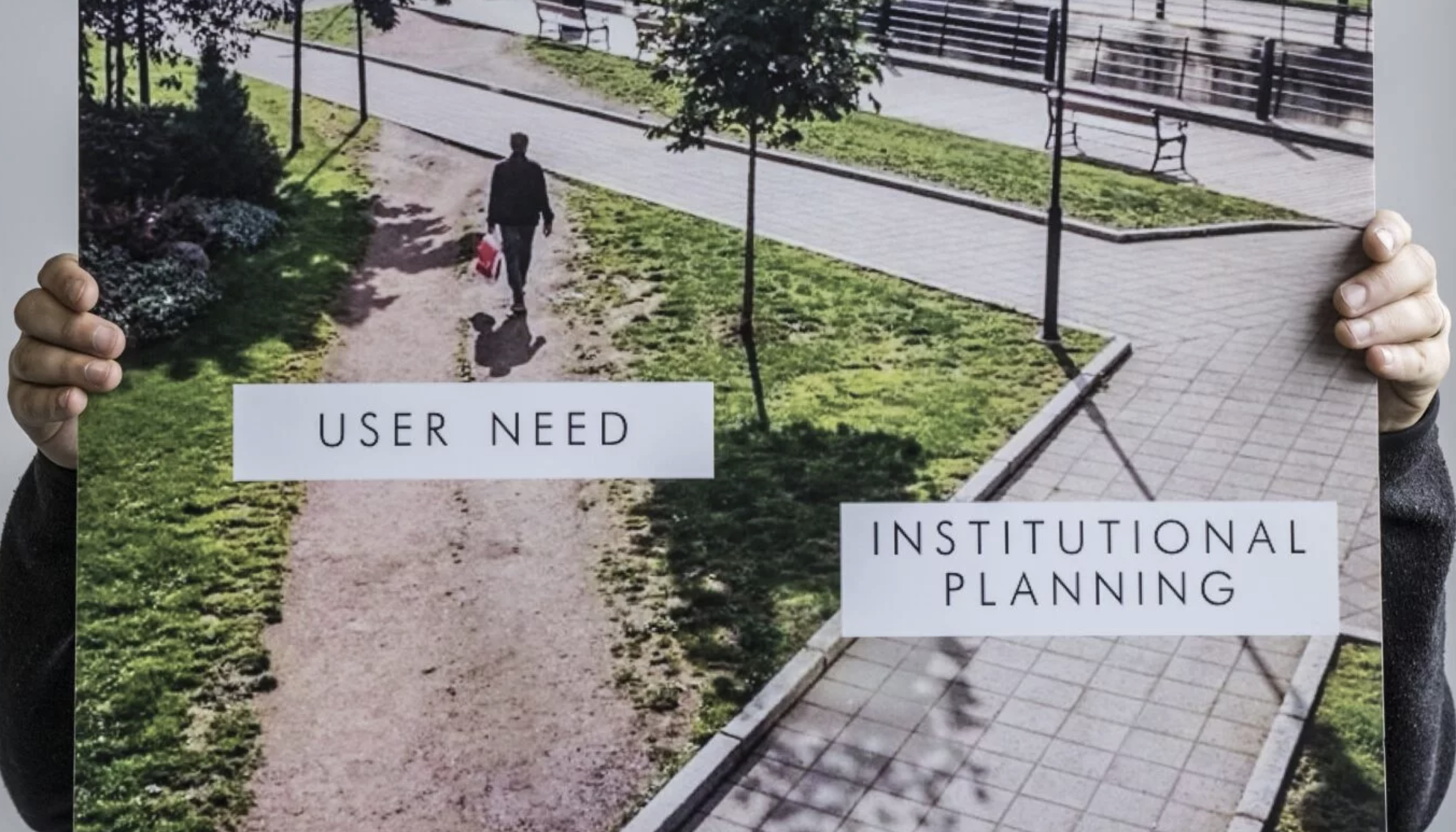
What is Inside-Out vs Outside-In?
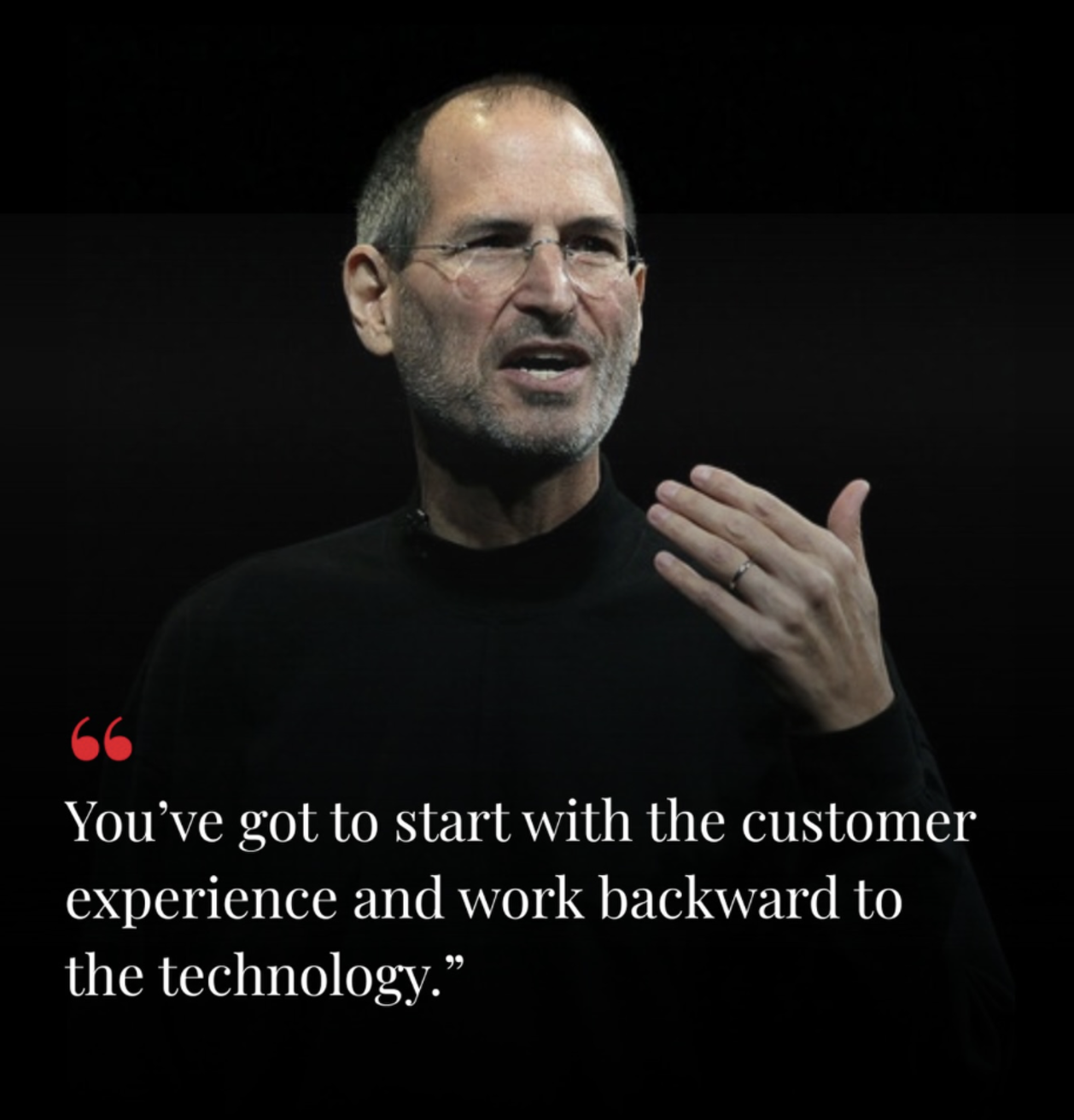
There is a well-known line from Steve Jobs that has become almost cliché in business circles:
“Start with the customer and work backwards.”
Steve Jobs was not just a product designer. He was one of the most iconic strategists of our time. He understood that scale does not come from optimizing internal processes first. It comes from orienting an entire organization around a clear point of view about the customer, and then aligning systems, talent, and technology to deliver against that point of view with discipline.
An inside-out organization is often well managed. Decisions are shaped by policy, risk management, legacy systems, and reliable internal processes. Improvement efforts focus on workflow optimization, cost control, compliance, and operational consistency. In regulated environments, this approach is understandable and frequently necessary.
But inside-out innovation has limits. It improves what already exists. It strengthens the back office. It reduces cost and tightens control. What it does not always do is fundamentally improve the lived experience of patients, citizens, members, or customers. In sectors where human adoption determines success, this becomes a structural constraint. You can optimize the internal machine, but if the experience does not meet real needs, outcomes plateau.
An outside-in organization begins with clarity about customer outcomes. It studies lived experience in depth. It identifies moments that matter across the end-to-end journey. It defines what trust, ease, and value mean from the user’s perspective. Then, and only then, does it redesign internal systems. This is what Jobs did at scale. He aligned design, engineering, operations, marketing, and retail around a clear customer experience philosophy. The result was not incremental improvement, it was sustained innovation.
The lesson is not about technology, it is about orientation. Inside-out organizations optimize from the centre.
Outside-in organizations align from the edge. It shapes what gets funded, what gets measured, and ultimately what gets built.
J5’s Total Experience Framework
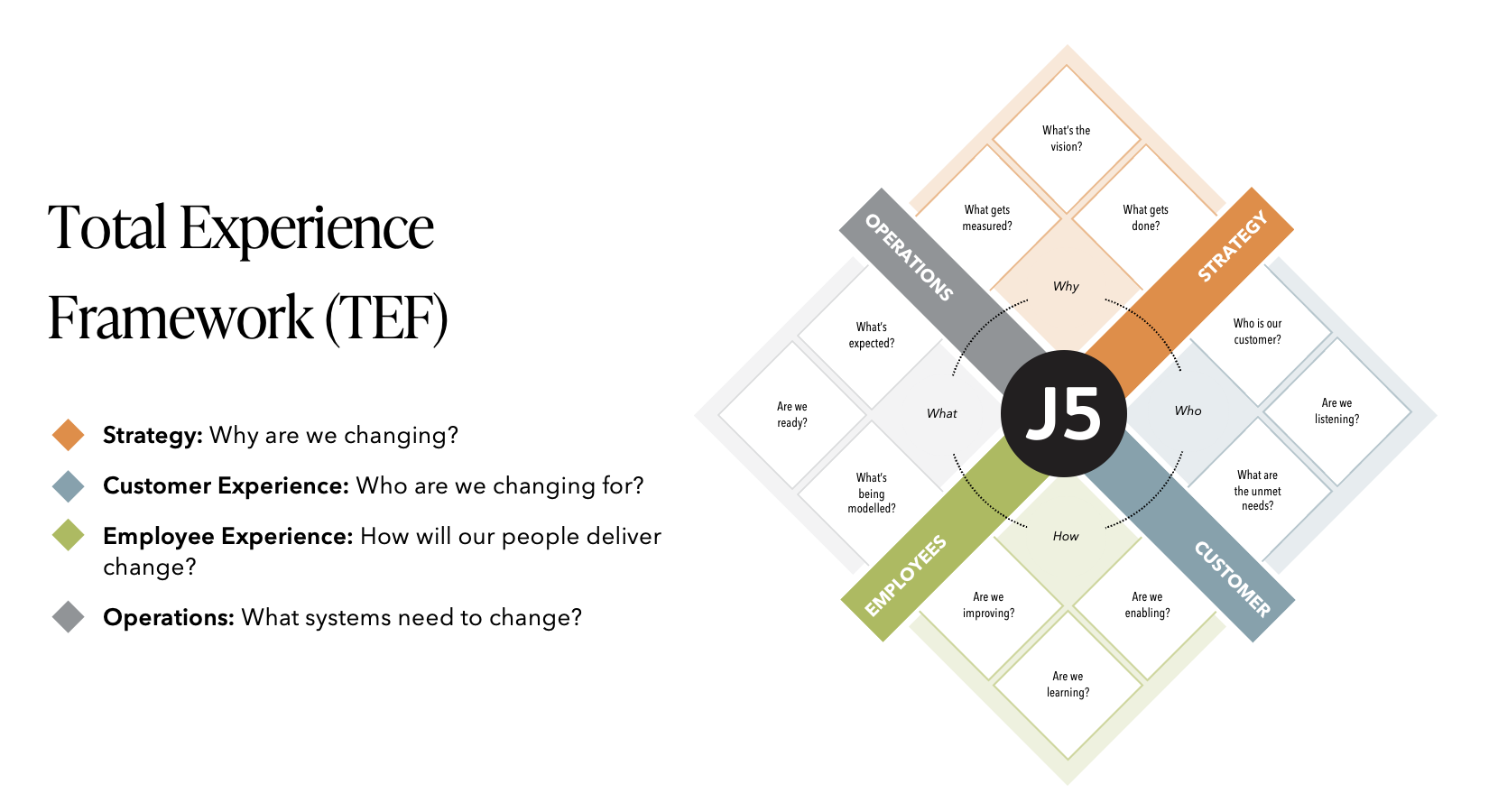
Our methodology for assessing and evolving maturity includes four interconnected domains:
Customer Experience, which examines the end-to-end experience of those you serve.
Employee Experience, which looks at the lived reality of the people delivering services.
Operations and Infrastructure, which includes governance, workflows, systems, funding models, and data.
Strategy and Leadership, which includes prioritization, portfolio management, performance measures, and decision discipline.
Transformation often stalls when one of these domains evolves without the others. A digital investment without workflow redesign. A strategy refresh without capability building. A service redesign without metrics that reinforce the intended change.
Design, in our view, is the way to connect strategy to implementation. It ensures that leadership intent is translated into services, systems, and behaviours that people can realistically adopt and sustain. Total Experience is how we apply that discipline at a departmental, functional, or enterprise-wide level.
A Human-Centred Maturity Model
Through hundreds of engagements across healthcare systems, government ministries, pension organizations, financial institutions, and non-profits, we have refined a five-stage maturity model.
Level 1: Inside-Out
Innovation is primarily driven by internal priorities. Governance emphasizes control. Customer feedback exists but does not meaningfully shape decisions. Initiatives compete for attention. Strategy translation into operational focus is inconsistent.
Inside-out organizations are often stable and disciplined. However, transformation efforts tend to focus on internal efficiency rather than experience outcomes. Progress requires defining customer segments clearly and committing at the leadership level to incorporate lived experience into meaningful decisions.
Level 2: Customer Aware
The organization listens more intentionally. Research and feedback mechanisms exist. Customer pain points can be described. However, insight remains fragmented. It does not consistently shape prioritization or investment. Leaders acknowledge the importance of customer-centricity, but urgent operational pressures still dominate.
Advancing requires embedding a consistent habit of referencing customer insight in key decisions and empowering cross-functional teams to prototype and learn.
Level 3: Customer Aligned
Customer insight begins shaping trade-offs. Journey maps are shared and referenced. Concepts are validated before large-scale investment. Cross-functional collaboration improves, although governance and performance systems may not yet fully support sustained innovation.
The next step requires aligning performance measures to customer outcomes and introducing portfolio discipline across incremental improvements and longer-term innovation.
Level 4: Customer Committed
Customer-centricity informs strategy, investment decisions, and governance routines. Capability building is intentional rather than dependent on a few individuals. Leadership discussions consistently reference customer outcomes. Governance distinguishes between ongoing operations and change initiatives. Innovation becomes managed rather than reactive.
Further progress requires embedding customer-backwards thinking into planning and budgeting processes.
Level 5: Outside-In
The organization consistently modernizes around the people it serves. Services evolve as needs change. Innovation systems are resilient and survive leadership transitions. Efficiency gains are achieved through better design rather than being the sole objective.
Getting Started: Establish the Current State
Customer-centric maturity cannot be assessed accurately through surveys alone. While perception-based assessments are useful for identifying alignment gaps, they do not reveal structural realities. In high stakes sectors, leadership requires a deeper understanding of lived experience and systemic constraints.
Our approach to establishing current state typically includes multiple layers of insight.
We conduct ethnographic research and direct observation within service environments. This may involve spending time in clinics, contact centres, government offices, digital operations, or community hubs to observe real workflows and workarounds.
We run leadership and frontline residencies to understand decision pathways, governance routines, backlog pressures, and approval cycles.
We facilitate co-design sessions that bring leaders, frontline employees, and service users together to map journeys and identify structural barriers.
We develop service blueprints that connect customer journeys to internal systems, policies, roles, and technologies.
We review active portfolios and governance structures to assess whether the organization is structurally capable of innovation at scale.
This deeper approach surfaces insights that lightweight engagements often miss. It reveals where governance slows experimentation. Where incentives conflict with customer outcomes. Where employee burnout undermines ambition. Where metrics reinforce inside-out behavior.
The purpose is not to audit compliance or evaluate performance. It is to create clarity about readiness. By assessing maturity consistently across customer experience, employee experience, operations, and strategy, we can pinpoint:
Where the organization stands today.
What structural barriers are preventing faster progress.
Where leadership attention will unlock the most capacity and momentum.
This level of diagnosis distinguishes design-led transformation from traditional consulting approaches that rely primarily on benchmarks or strategy workshops.
Design as a Strategic Differentiator
Many readiness assessments focus on compliance, financial metrics, or structural analysis. A design-led assessment begins with the customer experience. It connects qualitative insight with operational and financial realities. It surfaces emotional drivers, trust dynamics, and systemic friction that dashboards cannot capture.
In sectors where adoption determines impact, this perspective is not optional. Customer-centric organizations do not abandon operational discipline. They align operations to experience outcomes. The Total Experience Framework provides a structured way to make that alignment visible, measurable, and sustainable.
A Baseline for Responsible Leadership
Inside-out thinking will always exist. It supports stability and risk management. But in sectors responsible for health, equity, and community well-being, innovation must ultimately orient outside-in.
J5’s Total Experience Framework offers a disciplined, human-centred way to guide that shift. It connects strategy to implementation. It aligns systems to people. And it helps organizations evolve at a pace that builds strength rather than strain. That is the work we partner with leaders to deliver.